
Cognitive Performance Assessment Device.
Wellness
Circl.
www.circlbrain.com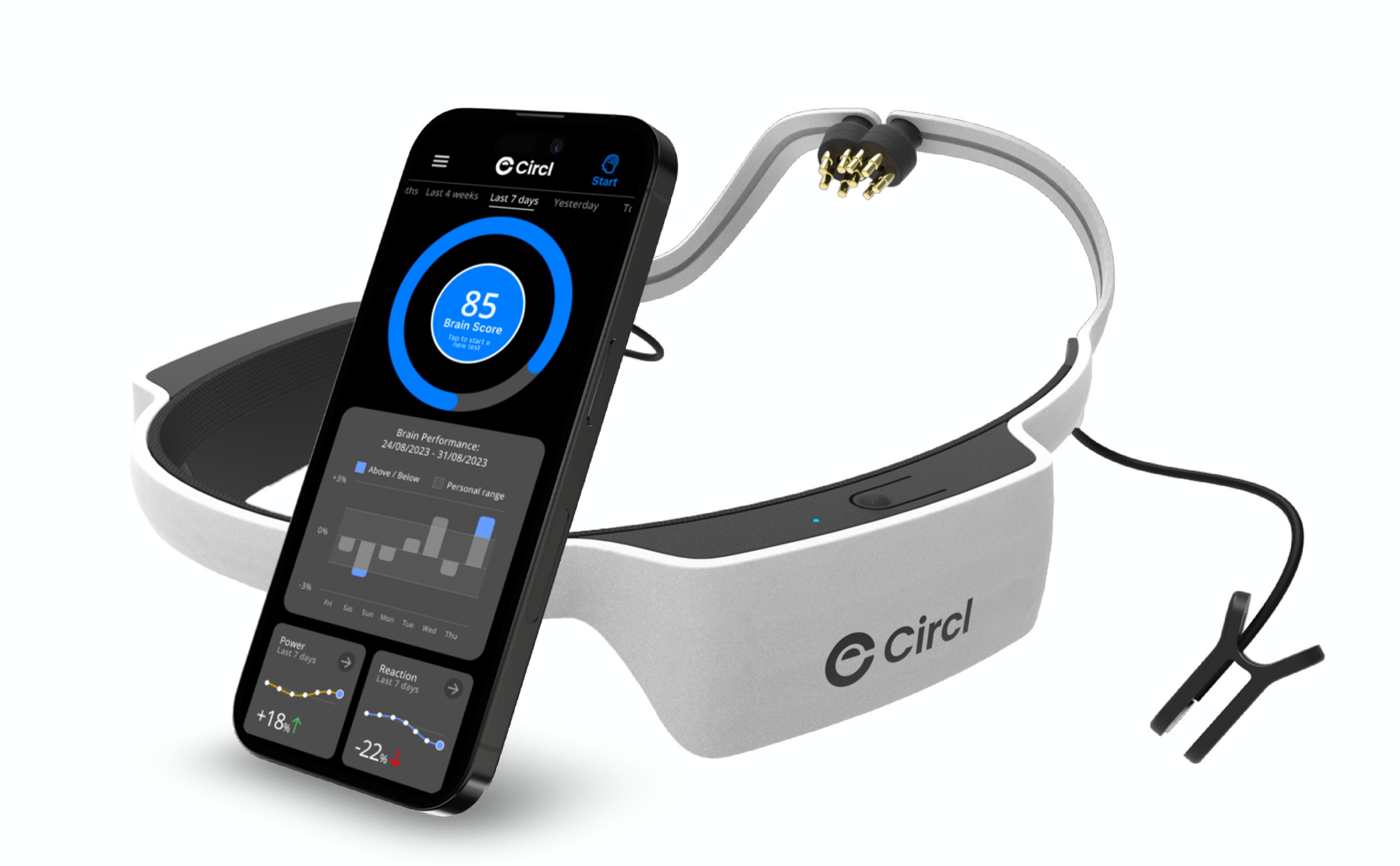
Circl is a lean startup that has created a revolutionary cognitive performance assessment device that tracks mental performance and resilience. Circl is now in the position where they desire to ramp up production to satisfy orders based on the success of their BETA prototype.
The “Ask”: “We have the potential for some large orders coming in and don’t have the inventory to satisfy them. The design is done, we just need to build more of them — can you build 100 of them in 3 months?”
Problem
Circl needed to be able to fulfill large orders quickly — but the only way to guarantee fast delivery was to pre-build finished inventory, which meant tying up cash, external assembly resources, and space against demand that wasn’t yet certain.
Constraints to consider:
- Core performance is working well — any design changes should be minimal to avoid unintended consequences
- Balancing re-design cost/timeline against production efficiencies needed care
Insight
The real constraint wasn’t the speed of final assembly — it was that finished-goods inventory was being used as a hedge against long lead times.
If final assembly could be made fast and simple enough to do “on demand,” Circl wouldn’t need to gamble on inventory at all — they could hold components, not finished units, and build against real orders instead of forecasted ones.
Solution
Ampersand developed a design-for-assembly (DFA) strategy that required:
- Minimal design changes, especially to essential performance parts/features
- Modular design with specialized subassemblies built by 3rd parties at lower inventory cost
- Eliminating failure-prone assembly steps and design features, raising yield
This maintained core performance while enabling assembly “on demand” with internal resources.
“Ampersand is the best we’ve worked with. They understood our needs completely, and the results were beyond my expectations.”
25%
Plug & Play
50%